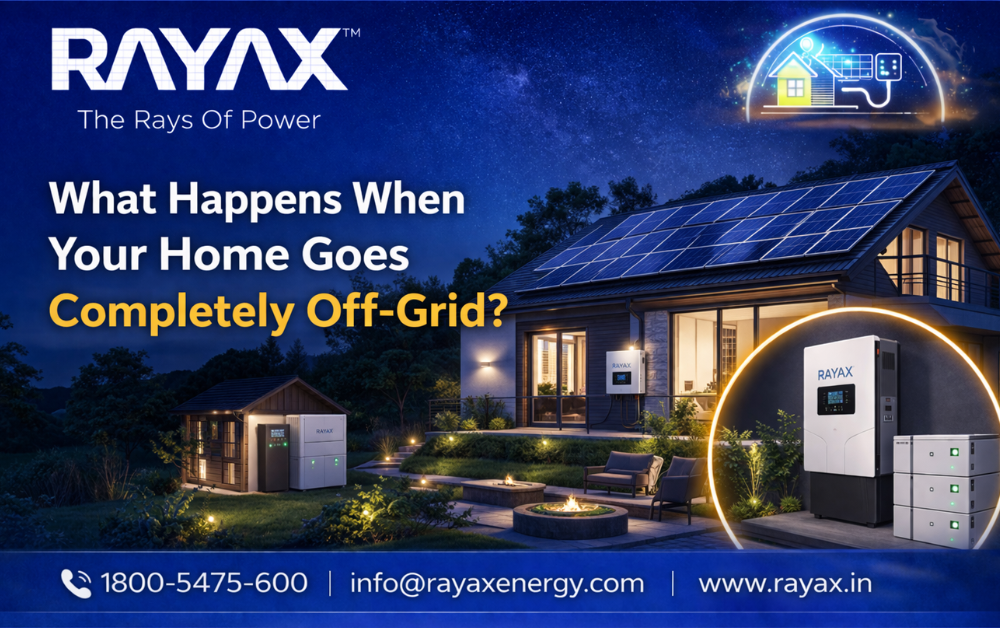
Imagine waking up one morning knowing your home produces every unit of electricity it needs. No power cuts. No shocking electricity bills. No dependency on the grid. That’s exactly what happens when a home goes fully off-grid. With rising power costs and unreliable electricity in many areas, homeowners are turning toward off grid solar panel systems for homes, not as a trend, but as a long-term solution. But what really changes when you unplug from the grid entirely? Let’s walk through it.
Understanding the Off-Grid Living Concept
What Does “Off-Grid” Really Mean?
Being off-grid means your home is not connected to the government or utility electricity network at all. Every bit of power you use is generated and stored on-site, usually through solar energy.
Off-Grid vs On-Grid vs Hybrid Systems
On-grid systems rely on utility power. Hybrid systems combine grid and solar. Off-grid systems stand alone, fully independent and self-sufficient.
Why More Homeowners Are Going Off-Grid
Rising Electricity Costs
Electricity tariffs are climbing every year. Off-grid solar locks in your energy cost for decades.
Power Cuts and Grid Reliability
Frequent outages push homeowners to seek dependable alternatives.
Environmental Awareness
Producing clean energy at home significantly reduces carbon footprint.
What Are Off Grid Solar Panel Systems for Homes?
Core Components Explained
An off-grid system includes solar panels, batteries, inverters, charge controllers, and sometimes a backup generator.
How These Systems Work Day and Night
Solar panels generate electricity during the day. Excess power charges batteries, which supply electricity at night or during low sunlight.
The First Thing That Changes After Going Off-Grid
Complete Energy Independence
You’re no longer affected by grid failures, tariff hikes, or outages.
Shift in Daily Power Habits
You become naturally mindful of how and when you use electricity.
How Electricity Is Generated in an Off-Grid Home
Role of Solar Panels
Panels capture sunlight and convert it into usable electricity.
Battery Storage Systems
Batteries store unused energy, ensuring uninterrupted power supply.
Inverters and Power Management
Inverters convert stored DC power into AC power suitable for household appliances.
What Life Feels Like Without a Utility Connection
No Monthly Electricity Bills
One of the most satisfying changes, your electricity bill drops to zero.
Awareness of Energy Consumption
You start optimizing appliance usage naturally, without sacrificing comfort.
Advantages of Off Grid Solar Panel Systems for Homes
Long-Term Cost Savings
Though initial costs are higher, long-term savings are substantial.
Protection from Power Outages
Storms, grid failures, or maintenance issues won’t affect your home.
Eco-Friendly Living
You actively contribute to a cleaner planet every single day.
Challenges You Should Expect
Initial Installation Cost
Off-grid systems require higher upfront investment due to batteries.
Battery Maintenance
Modern lithium batteries are low-maintenance but still require monitoring.
Power Planning During Low Sunlight
Energy planning becomes important during extended cloudy periods.
How Much Power Can an Off-Grid Home Use?
Calculating Household Energy Needs
System size depends on daily power consumption and appliance load.
Managing High-Power Appliances
ACs, geysers, and pumps can be used, just with proper system design.
What Happens During Cloudy Days or Monsoons
Battery Backup Strategy
Well-sized batteries can power homes for 1–3 days without sunlight.
Backup Generators (Optional)
Some homeowners keep a generator for extreme conditions.
Is Off-Grid Living Comfortable or Restrictive?
Modern Technology Makes It Easy
Smart inverters and energy apps make monitoring effortless.
Lifestyle Adjustments That Matter
Simple habits, like running heavy appliances during daytime, go a long way.
Off-Grid Solar Systems for Urban vs Rural Homes
Space and Roof Requirements
Rural homes have more flexibility, but urban rooftops also work well.
Local Regulations and Permissions
Off-grid systems often face fewer regulatory hurdles than grid-tied systems.
Financial Perspective: Cost vs Return
Payback Period Explained
Most off-grid systems recover costs within 6–8 years.
Rising Property Value
Energy-independent homes attract higher resale value.
Common Myths About Off-Grid Solar Homes
“You’ll Live in Darkness”
Modern systems provide uninterrupted, reliable power.
“Off-Grid Is Only for Villages”
Urban homes worldwide are successfully going off-grid.
Who Should Seriously Consider Going Off-Grid
Remote Location Homeowners
Grid access is costly or unreliable in remote areas.
High Power Bill Households
Large homes with high consumption benefit the most.
Sustainability-Focused Families
Those committed to eco-conscious living find an off-grid ideal.
The Future of Off-Grid Living
Smarter Batteries and AI Energy Management
Technology is making systems smarter, safer, and more efficient.
Growing Adoption Worldwide
Off-grid living is moving from niche to mainstream.
Final Thoughts
When your home goes completely off-grid, you don’t lose comfort, you gain control. Off grid solar panel systems for homes offer freedom from rising bills, unreliable grids, and environmental guilt. It’s not about living with less power; it’s about using power smarter. For many homeowners, going off-grid isn’t extreme, it’s inevitable.
FAQs
1. Can an off-grid solar system run AC and refrigerators?
Ans: Yes, with proper system sizing and battery capacity.
2. How long do batteries last in off-grid systems?
Ans: Modern lithium batteries last 10–15 years.
3. Is off-grid solar legal in urban areas?
Ans: Yes, in most regions, as long as local building norms are followed.
4. What happens if solar panels fail?
Ans: Systems include safeguards and optional backup generators.
5. Is off-grid living worth the investment?
Ans: For many homeowners, long-term savings and independence make it absolutely worth it.