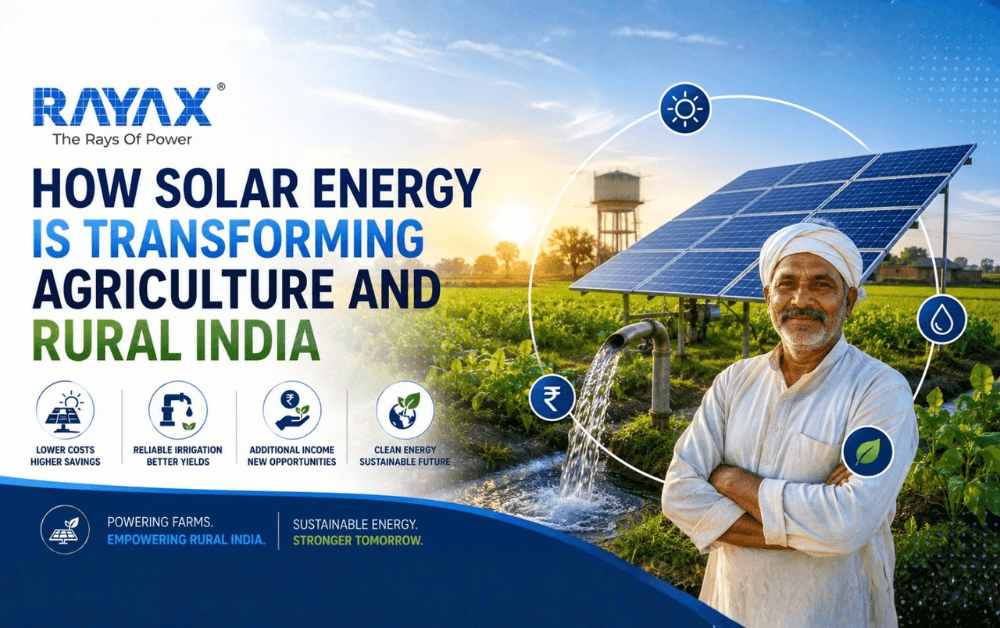
India’s agricultural industry has been a key source of economic growth for the country and its villages. Countless farmers rely upon agriculture for not just earnings but also sustenance and local development. But, problems like increasing prices of electricity, unreliable power sources, high costs of using diesel, and inadequate infrastructure have continued to hinder the productivity of these farmers and rural areas.
Today, among many other benefits, solar energy has proved to be an incredible answer to all these concerns. With increased awareness about renewable energy and support from initiatives such as the PM-KUSUM Yojana, the use of solar power has started to make a huge difference in farming operations and rural infrastructure development in India.
Starting from cutting down on costs to generating extra revenue, solar energy is changing everything about how rural people obtain and utilise power. Companies such as Rayax Energy are contributing to this change by assisting the building up of solar infrastructure and renewable energy solutions.
The Growing Importance of Solar Energy in Agriculture
Agriculture needs a reliable source of energy for the following reasons:
• Irrigation systems
• Water pumping
• Storage systems
• Processing of agricultural produce
• Rural energy systems
For many farmers, the traditional sources of energy have been diesel-driven water pumps, Inconsistent supply of electricity from grid power, and conventional sources of expensive energy.
However, such sources may place undue economic strain on the farmers.
The use of solar energy provides an environmentally friendly solution to agriculture production.
Why Rural India Needs Renewable Energy Solutions
Many rural areas in India still experience inconsistent electricity generation, electricity power breakdowns, weak infrastructure, expensive fuel, and high cost of farming operations.
These affect irrigation for agriculture, farmer production efficiency, management of water sources, and economic development in rural areas.
Renewable energy such as solar energy plays a key role in solving this problem through decentralised energy.
How Solar Energy is Transforming Agriculture
1. Reducing Dependence on Diesel
The diesel pump has been a popular choice for irrigating in rural areas of India for several years now. With the ever-increasing price of fuel, however, these pumps are becoming costly to use.
Challenges faced with Diesel Irrigation Systems Include:
• Expensive fuel
• Need for frequent servicing
• Causing environmental pollution
• Operating with inefficiency
Using solar energy is a much better choice in this regard.
Advantages of Solar Irrigation Pumping System are:
• Inexpensive to operate
• Decreased dependence on fuel
• Easier and reliable operation
• Fewer maintenance needs
• Environmentally sustainable operation
How Rayax Energy Supports Renewable Agricultural Infrastructure
The company Rayax Energy has contributed to sustainable solar infrastructure by providing support in efficient renewable energy projects. The technical knowledge of the company has facilitated the improvement of reliability and efficiency of energy generated using solar energy technology for agricultural and rural purposes.
2. Improving Irrigation Reliability
Consistent irrigation is crucial for the successful growth of crops and agriculture in general. The main problems that farmers encounter in some areas include the following:
• Inconsistent supply of electricity
• Electricity cuts at crucial times when farming needs to take place
• Unavailability of grid electricity
The use of solar energy helps farmers to get uninterrupted electricity during the day for irrigation.
Benefits of Consistent Solar Irrigation include effective management of crops, increased agricultural production, decreased reliance on inconsistent electricity, and optimal use of water.
3. Lowering Farming Costs
One of the primary advantages of using solar energy in agriculture is the cost-cutting factor.
Farming is expensive because of use of diesel, high electricity costs, maintenance of equipment, and cost of running pumps.
The use of solar energy will help reduce these costs.
Financial Benefits of Solar Energy are as follows:
• Cutting down of operating costs
• Saving on energy
• Improving the economic stability of farmers
• Independence from fuel costs
It makes it easier for farmers to focus on crop cultivation and farm expansion.
4. Creating Additional Income Opportunities
Not only is solar energy lowering costs, but also, it is providing income-generation avenues for rural areas.
Through programs such as PM-KUSUM scheme, farmers have the option of:
• Leasing land for setting up solar projects
• Producing solar energy
• Generating surplus electricity and selling it to the power grid
Advantages for Farmers here are:
• Guaranteed income
• Making productive use of idle lands
• Reducing risks
• Support beyond their regular agricultural income
This has resulted in farmers becoming producers of energy rather than just consumers.
5. Supporting Sustainable Farming Practices
Climate change and environmental destruction have resulted in the necessity for sustainability in agriculture.
Conventional sources of energy lead to:
• Emissions of carbon
• Pollution of the air
• Exhaustion of resources
• Solar energy can help farmers practice sustainable agriculture.
Benefits of Solar Energy for the Environment are:
• Decreased carbon footprints
• Reduced pollution
• Sustainable source of energy production
• Increased dependence on solar energy
This makes agriculture more sustainable in India.
The Role of PM-KUSUM in Rural Transformation
The PM-KUSUM Scheme has emerged as one of the most successful renewable energy programs in India to date.
It focuses on:
• Solar-powered irrigation systems
• Decentralised solar systems
• Solarising agricultural pumps
• Renewable energy infrastructure in rural areas
Key Objectives of PM-KUSUM include:
• Boost farmers' income
• Enhance access to energy in rural areas
• Support use of renewable energy
• Reduce reliance on traditional energy sources
There have been numerous openings for farmers, solar power producers, and renewable energy firms due to the scheme.
How Solar Energy Supports Rural Development
The use of solar energy can have other impacts apart from agricultural development.
1. Increased Energy Availability
There are many rural communities where there is an inadequate supply of energy. The implementation of solar energy projects assists in enhancing energy supply, improving infrastructure, and increasing rural electrification.
2. Creation of Jobs
Projects related to renewable energy can provide jobs for construction, setting up the system, maintenance of the system, technical operation of the system, and infrastructure development.
3. Development of Infrastructure
Solar projects can assist in road improvement, connectivity improvements, development of technical infrastructure, and increasing rural investments.
Challenges in Adopting Solar Energy in Rural Areas
However, despite all the advantages, there are a few disadvantages related to the wider use of solar energy in large volumes.
High Initial Costs: Installation of solar panels involves huge initial costs but thanks to government subsidy programs, they can be reduced significantly.
Technical Ignorance: Some rural areas may have a lack of technical knowledge regarding solar power or its benefits, technical knowledge about renewable energy systems and infrastructural limitations.
Importance of Reliable Solar Project Execution
For rural areas, successful installation of solar power systems will hinge greatly on thorough planning and implementation.
Some critical elements involved here include:
• Site evaluation
• Engineering expertise
• Effective installation
• Regulatory coordination
• Ongoing operation support
And this is why professional renewable energy firms can be very crucial.
How Rayax Energy Contributes to Renewable Energy Development
With increasing use of renewable energy in India, organisations such as Rayax Energy have a crucial part to play in promoting sustainable infrastructure development.
Areas Where Rayax Energy Adds Value
Planning for Successful Solar Projects: Good assessment and planning can make any project more successful.
Engineering Expertise: Technical know-how makes the projects successful and helps maintain their effectiveness.
Renewable Energy Infrastructure Development
The Rayax Energy company helps in developing reliable solar technologies for agriculture as well as for power purposes.
Long-Term Sustainability Focus
Their emphasis on proper implementation and efficient use of renewable energy is essential for sustained success.
Rayax Energy aids India in moving towards a sustainable future through its effective implementation strategies and proficiency in renewable energy.
The Future of Solar Energy in Rural India
The Indian renewable energy industry is bound to witness tremendous growth in the upcoming years.
Some possible future developments could be more use of solar pumps, large-scale decentralisation of solar power plants, better battery storage systems, effective irrigation methods, and access to renewable energy.
With advancements in technology and increased awareness about renewable energy sources, solar power continues to change rural India and its agriculture practices.
Why Solar Energy is a Game-Changer for Agriculture
In today’s time, solar energy cannot be considered just an alternate form of power anymore; rather, it is an integral part of agriculture growth and rural development.
The effects include:
• Lower agricultural expenses
• Enhanced irrigation efficiency
• Clean production of energy
• Increased sources of income for farmers
• Infrastructure development that is sustainable
Various government schemes such as the Prime Minister KUSUM Yojana scheme and increased involvement of firms in renewables are rapidly making this shift.
Through proper planning of projects and infrastructural developments with renewable energy policies, organisations such as Rayax Energy play a vital role in shaping the future of India’s agricultural and rural industries.