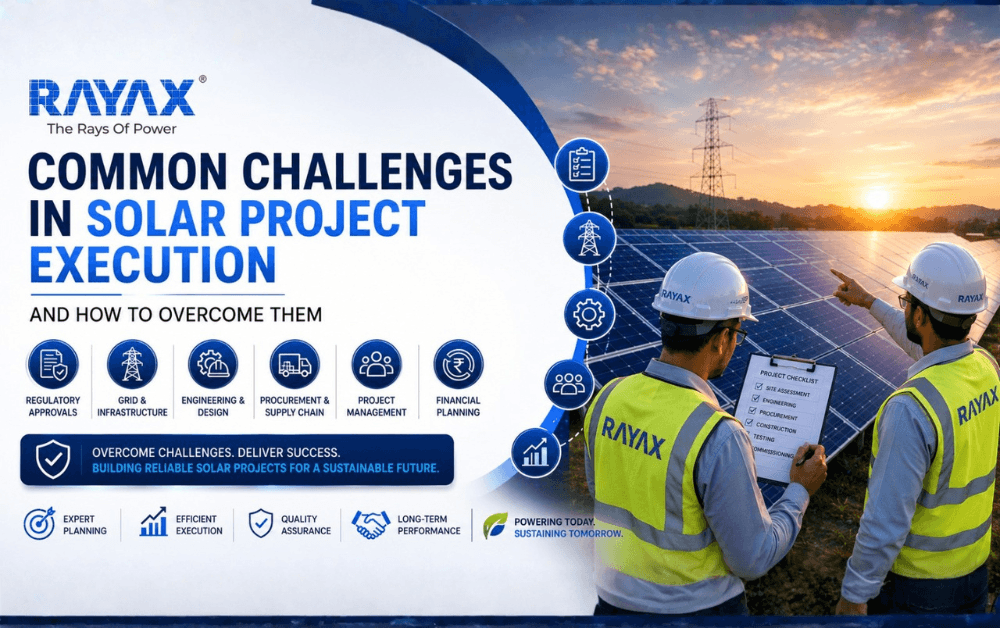
The field of renewable energy is booming in India, and solar energy is now amongst the country's top infrastructure priorities. With solar energy plants being set up in various parts of India, large solar parks, industrial solar power plants, and agricultural renewable projects are gaining traction.
While there are great opportunities in the solar industry, project execution is still considered one of the most crucial and difficult aspects of renewables. Solar energy project execution entails a lot more than just setting up panels on land. Project execution requires proper planning, expert knowledge, coordination with authorities, management of infrastructure, financial oversight, and an overall project plan.
Even small execution problems might have an impact on project deadlines, generation efficiency, performance, return on investment, and sustainability.
Therefore, efficient and well-planned project execution and renewable energy project help are very important. Organisations like Rayax Energy play a major role in providing proper planning and organised execution in addition to renewable energy infrastructure construction.
Knowing about the common challenges in solar project execution, along with the means of overcoming them, is highly necessary for renewable energy professionals, businesses, organisations, landowners, and investors.
Why Solar Project Execution Requires Strategic Planning
The deployment of any solar energy system entails numerous processes that should run seamlessly from start to finish in order for everything to be successful. Every step of the process will have an effect on the success of the entire project.
This includes things like site location and design, purchasing equipment, constructing the facility and even launching the facility.
A badly planned solar power project may end up experiencing:
• Delays in completing the project
• Going over budget
• Efficiency problems within the solar power plant
• Regulatory issues
• Maintenance challenges over time
Major Challenges in Solar Project Execution
1. Land Acquisition and Site Selection Challenges
Site selection is one of the first and most crucial steps in any solar power plant project. It can affect the performance of the plant, the cost of constructing infrastructure, and energy production.
However, selecting appropriate land may not be as simple as one might assume.
Some site-related problems include:
• Disputes over ownership and lack of proper documentation
• Inappropriate landscape or uneven ground
• Poor access to the area
• Long distance from the substations and grid
• Environmental regulations
A bad choice of site will result in problems down the line in terms of project development. Bad terrain and poor connections may affect costs, delays in obtaining approvals, and performance.
How to Overcome It
Conduct Feasibility Studies: Conduct proper studies on land surveying, irradiation assessment, and infrastructure assessment before undertaking the actual construction phase of your project.
Ensure Legal Clearances: Proper documentation of ownership and other related processes will prevent any complications in the future.
Ensure that the Selected Land is Near Grid Points: This ensures that you have better access to grid points and save costs on development.
How Rayax Energy Supports Better Site Planning
Organised project planning and site evaluation efforts by Rayax Energy have been seen to contribute positively to making the project site more feasible while decreasing risk factors involved and improving overall performance.
2. Delays in Government Approvals and Documentation
Renewable energy projects need permissions from various government agencies, utilities, and regulatory bodies. Documentation and permission delays are some of the primary causes for failure in meeting timeframes in renewable energy projects.
Challenges in obtaining approvals may include the following:
• Missing documentation and submission errors
• Late approval processes
• Non-compliance with state policies
• Coordination delays with utilities
• Procedure changes
• Such delays may adversely affect:
• Project construction timelines
• Financial planning
• Confidence of investors
• Overall project execution efficiency
For large-scale projects, even minor delays in documentation can cause weeks or months of delay.
How to Overcome It
Accurate Paperwork Should be Maintained: Organised documentation minimises needless exchange of information during the approval process.
Knowledge of New Policies is Critical: Regulations governing renewable energy might change, requiring policy knowledge.
Good Coordination with the Authorities is Crucial: Proactive interaction with the DISCOMs and regulatory agencies will help minimise avoidable delays.
Role of Rayax Energy
The Rayax Energy team appreciates the intricacies that come with approving projects relating to renewable energy. They have an approach that is geared towards enhancing project processes such as documentation and execution.
3. Infrastructure and Grid Connectivity Issues
Grid connectivity efficiency is an important determinant in solar project performance. If there is a lack of adequate transmission facilities, it means that even the best solar facilities will experience inefficiency.
In most cases, the execution problem encountered by infrastructure inadequacies is mostly in the countryside and remote areas.
Problems caused by inadequate infrastructure may affect:
• Low transmission capacity
• Poor rural electric infrastructure
• Distant from substations
• Utility connection delays
• Technical integration problems
• Inadequacy will lead to increased:
• Project development costs
• Commissioning delays
• Energy transmission losses
• Operational inefficiencies
How to Overcome It
Assess Connectivity Prior to Planning: Grid connectivity needs to be evaluated prior to settling on any particular locations for projects.
Increase Cooperation with Utilities: Good coordination with utility companies aids in making the technology integration process easier.
Apply Smart Engineering: A good engineering solution can increase energy transfer effectiveness.
How Rayax Energy Adds Value
Rayax Energy emphasises systematic infrastructure planning and strategic implementation strategies to ensure better technical integration and efficiency within renewable energy projects.
4. Poor Engineering and System Design
The efficiency of a solar power station largely depends on the quality of engineering. In most cases, poorly engineered systems have low efficiency rates, generate fewer electricity outputs, and incur higher costs in terms of maintenance.
Common engineering errors may occur due to:
• Misestimating the capacity
• Poor positioning and distance between panels
• Bad electrical layout
• Mismatching of equipment
• Lack of consideration of future scalability
Design flaws even in seemingly minor aspects could greatly diminish the amount of generated energy.
How to Overcome It
Emphasis on Technical Precision: Comprehensive technical analysis ensures higher efficiency and reliability of the system.
Design Considering Site Conditions: Each project site is different and requires special conditions to be considered while designing a renewable energy system.
Engage With Professionals Specialising in Renewable Energy: Technical skills help in making more accurate plans and minimise errors in the future.
How Rayax Energy Supports Reliable Execution
Rayax Energy emphasises technical organisation in renewable energy implementation and infrastructure efficiency. The emphasis on well-planned structure is essential for optimising performance, reliability, and sustainability of the plants.
5. Procurement and Equipment Quality Concerns
The performance and longevity of solar facilities will largely depend on the materials that were utilised during construction.
Even if lower-quality equipment is cheaper upfront, it is likely to cause more issues in operation and maintenance further down the line.
Some procurement difficulties encountered are:
• Material supply delays
• Component quality inconsistencies
• Coordination problems between vendors
• Cost-oriented sacrifices of infrastructure quality
Whereas, poor-quality components may also cause:
• Decreased efficiency
• Technical problems
• Equipment deterioration
• Higher maintenance expenses
How to Overcome It
Prioritise Effective Procurement Methods: Procurement that emphasises quality makes a project more durable and consistent.
Match Components to Requirements: Everything must be compatible with the project design and requirements.
Keep Good Coordination with Vendors: Supply chain management prevents installation problems and inefficiencies.
How Rayax Energy Contributes
Rayax Energy ensures renewable energy projects with reliability through efficient planning that is oriented towards quality, proper coordination, and sustainable infrastructure management.
6. Project Management and Coordination Difficulties
There are various teams that work together at once on solar energy projects in the phases of engineering, procurement, construction, utility coordination, and regulatory approvals. If there is no effective project management in place, there could be an increase in chaos.
Coordination problems in Solar Energy Projects may include:
• Lack of communication among different teams
• Time schedule problems
• Workforce management problems
• Construction problems
• Ineffective resource management
How to Overcome It
Structure Project Timelines: Proper scheduling helps in better flow of work and accountability.
Effective Communication Among the Parties Involved: Proper coordination avoids misunderstandings and operational delays.
Monitor Progress in Execution: Tracking systems allow early detection of problems and make for efficient execution.
Role of Rayax Energy
Efficiency of operation and management in renewable energy projects is achieved through the efficient handling of operations management by Rayax Energy.
7. Financial and Investment Challenges
The implementation of solar projects needs high investments at the onset, hence financial planning is crucial in the execution process.
Delays or inefficiencies encountered can lead to increased costs of the projects and eventually impact on investments made.
Some of the financial challenges include:
• Over-budgeting
• Delays in financing
• Increased cost of infrastructure development
• Inadequate cash flow management skills.
How to Overcome It
Develop a Practical Budget Planning Strategy: Accurate cost estimation will make your financial position more secure.
Efficient Execution: Timely completion of projects can help you save from extra operational costs.
Maintain Efficient Project Management: Communication and proper execution can be helpful in improving investor trust.
Why Experienced Renewable Energy Support Matters
With increased expansion in India’s renewable energy sector, there have been larger solar installations, which are increasingly technical and sophisticated, making it imperative to rely on experienced companies that understand these dynamics.
Executing successful projects today involves:
• Expertise in technology
• Infrastructure development
• Regulatory knowledge
• Efficient coordination
• Long-term operational planning
It is in this area where experienced renewable energy firms can really excel.
How Rayax Energy Supports Renewable Energy Development
The involvement of Rayax Energy in developing renewable infrastructure involves the following:
• Strategic project planning
• Technological support during execution
• Effective coordination of workflows
• Energy sustainability approaches
• Implementation for operational efficiency
Through their well-coordinated strategies, their success becomes evident.
Final Thoughts
The use of solar energy has been quite transformational when it comes to sustainable growth in India. Nevertheless, proper execution of solar projects goes beyond just installing the solar energy systems and involves overcoming some issues such as selection of land, infrastructure development, approval processes, engineering, procurement, financial management, and project implementation.
In case proper planning and execution is not done, the above-mentioned issues can have serious impacts on project outcomes.
Through application of strategic project execution techniques and partnering with well-established renewable energy firms such as Rayax Energy, individuals can significantly enhance their renewable energy projects.
As India keeps on advancing towards a greener future, proper execution of solar energy projects will still be one of the crucial pillars of renewable energy success.